
Where do you hide the espresso machine? Two ideas from Simone Roveda
Two pieces by Simone Roveda raise a practical question: how do you design a coffee cabinet that looks good from the living room and still leaves room to fill the tank or set out a tray?
On Sunday morning, when you make coffee for four, you need room for the cups right next to the espresso machine. In the evening, sitting on the sofa, you might prefer to see nothing but a wooden front. How do you design a cabinet you like at both moments? Two pieces of furniture shown on @interiordesignmilano are a good starting point.
What you see with the doors closed
Interior Design Milano is the platform of the Italian designer Simone Roveda. The account shows his own projects and work made together with brands and manufacturers. In the post “Two States, One View”, the credits are explicit: Roveda did the design and MT Luxury Wood the production. From the room, the bar cabinet is a compact volume of smoked oak crossed by a gold line. Only when it opens do the brass, the glasses and the light inside appear.
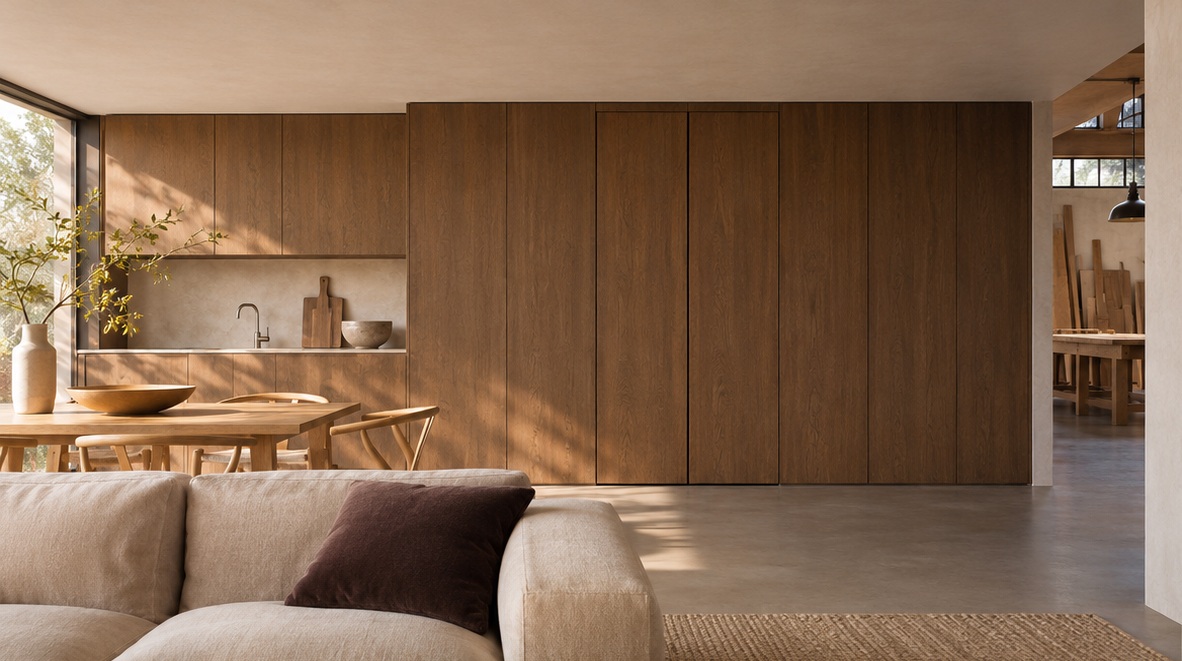
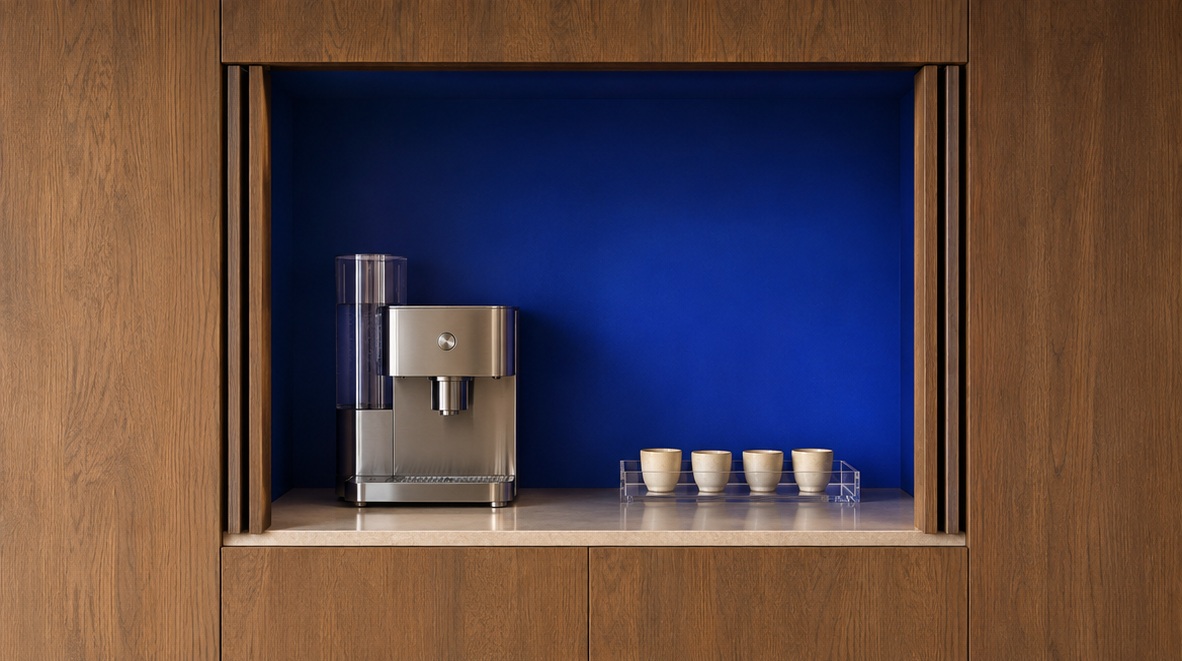
From this I would borrow a simple decision for a kitchen open to the living room. I would carry the same line of the neighbouring fronts across the door of the coffee cabinet. The colour I would like to see in the morning, perhaps a deep blue, I would put on the wall behind the cups. That way you get a discreet kitchen seen from the sofa and a completely personal corner when you open it.
What you need to be able to do with the cabinet open
In “A Sculpture That Keeps a Secret”, another piece designed by Roveda for MT Luxury Wood, the top of a bronze side table rotates to reveal a bar. The glasses and the decanter sit on curved steps, at different heights. What interests me here is where your hand goes once the piece is open.
For a coffee cabinet, I would start from the machine you already use. Where do you pull out the tank? How far do you need to lift the lid to pour in the beans? Where do you put the second cup while you fill the first? The answers give you the height of the first shelf and show which side is worth leaving as free worktop. For installation, also keep the ventilation gaps given in the machine’s manual.
The door is worth drawing open. If it ends up between you and the table, you will walk around it with every cup. When the opening faces a walkway, one option is doors that slide back into the side of the cabinet. For Blum’s Pocket systems, for example, the manufacturer states a cavity width of only 100 mm for single-door applications. Subtract those centimetres from the available width before you decide whether the solution suits you.
The tray test
Put the espresso machine on the table and mark with masking tape how much worktop you think you can reserve for it. Place a tray and the cups you use when you have guests in that spot. Then take out the tank, as if you were about to fill it. If you have to move the tray every time, you have just found what is worth changing in the drawing. Take a photo from above and bring it to the furniture discussion. It tells us more about your cabinet than a picture with the doors closed.
Got a tricky corner? Send it to us.
Send us your measurements or a few photos of the room, and we’ll come back with a proposal.